TUCSON, AZ — SONORAN DESERT
32.2226° N, 110.9747° W
Barrio Buffelworks
TOXIC
WEEDS →
BEAUTIFUL
HOMES.
At Barrio Buffelworks, anyone can learn how to mold adobe with local dirt and destructive buffelgrass. Ultimately, this one small brickyard will become a citywide program paying unhoused people to make bricks for beautiful low-income housing. Together we're building a sustainable vision to save our desert, expand access to affordable housing in Tucson, and restore some of the beauty lost to the disastrous urban design of the 1960s and 70s.
FROM WEED TO WALL
Five easy steps transform an ecological threat into beautiful dwellings. No expertise needed, just a willingness to get your hands dirty.
HARVEST
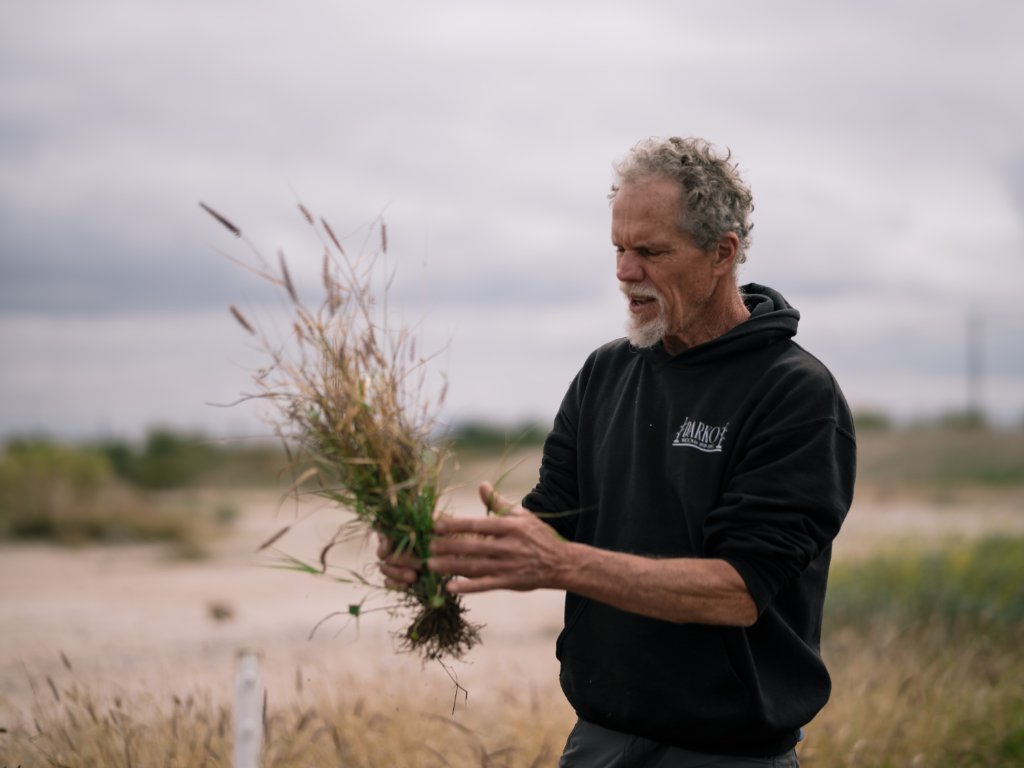
Pull it. Bag it. Haul it back.
Volunteers pull buffelgrass, a wildfire accelerant that's strangling the Sonoran Desert. A typical pull collects hundreds of pounds, which can make the equivalent of hundreds of regular bricks (ours are huge). See the Build Calendar for our Saturday morning pulls, as well as other pulls all across Tucson.
COAT
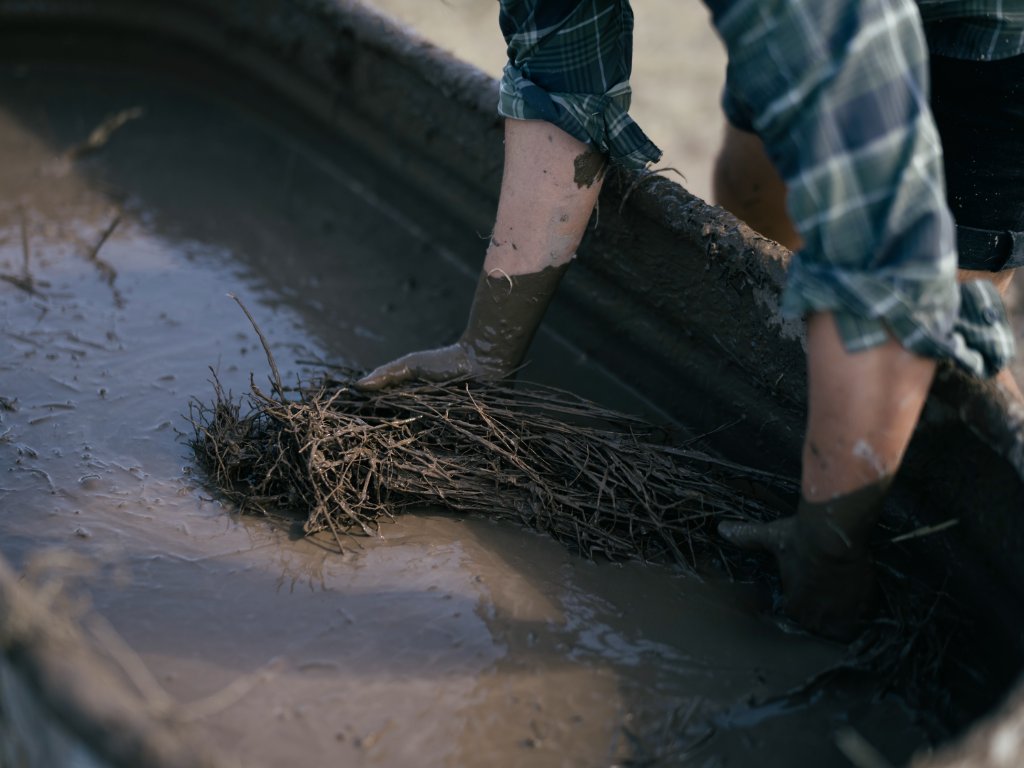
Slip kills the seed.
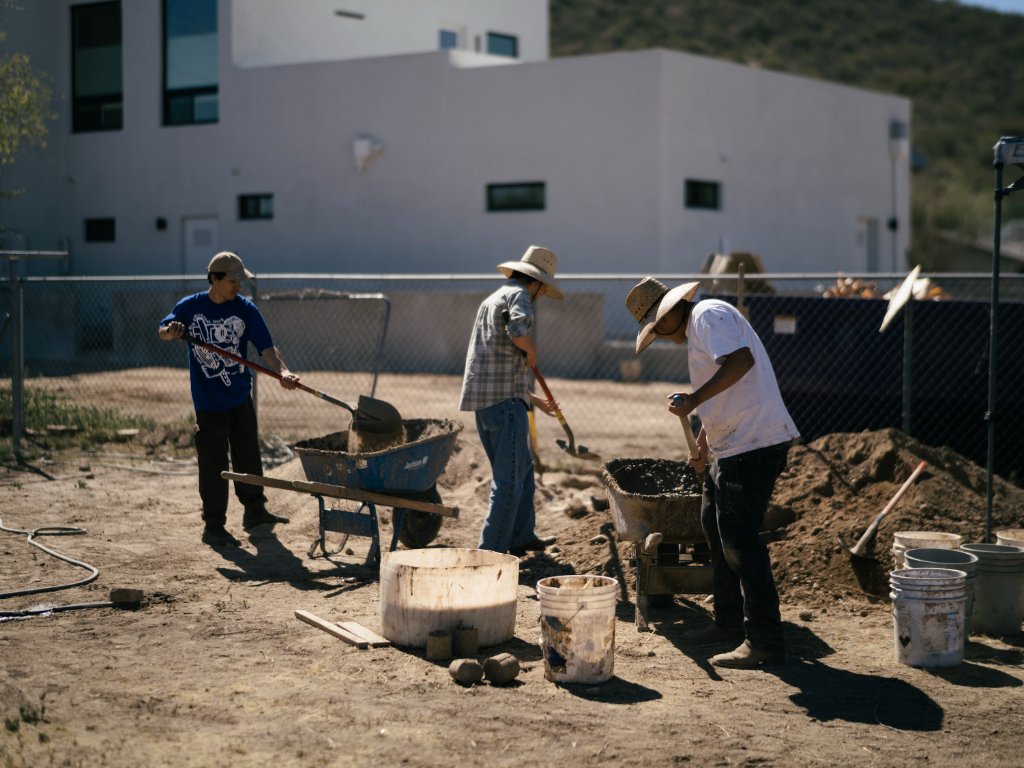
Before it's put into bricks, harvested grass must be drenched in a thin clay slurry called slip. This lets mud adhere to the grass and germinates any seeds to make them non-viable, ensuring that no live seed makes it out of our brickyard.
MIX
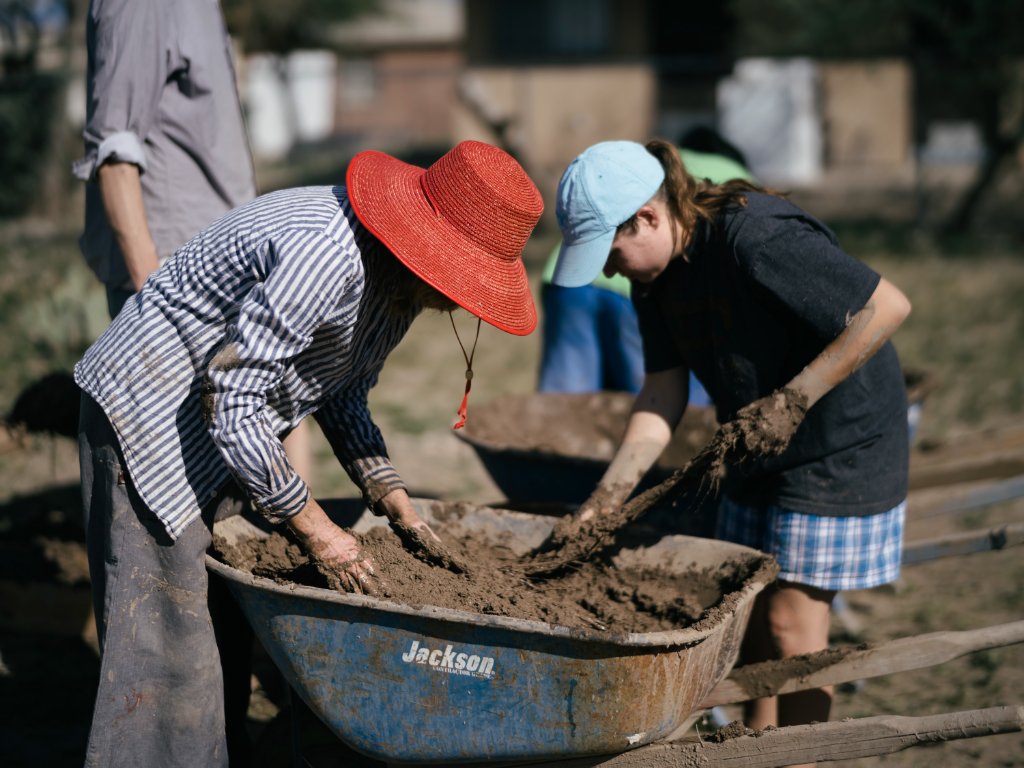
Dirt and sand and fiber — that's all.
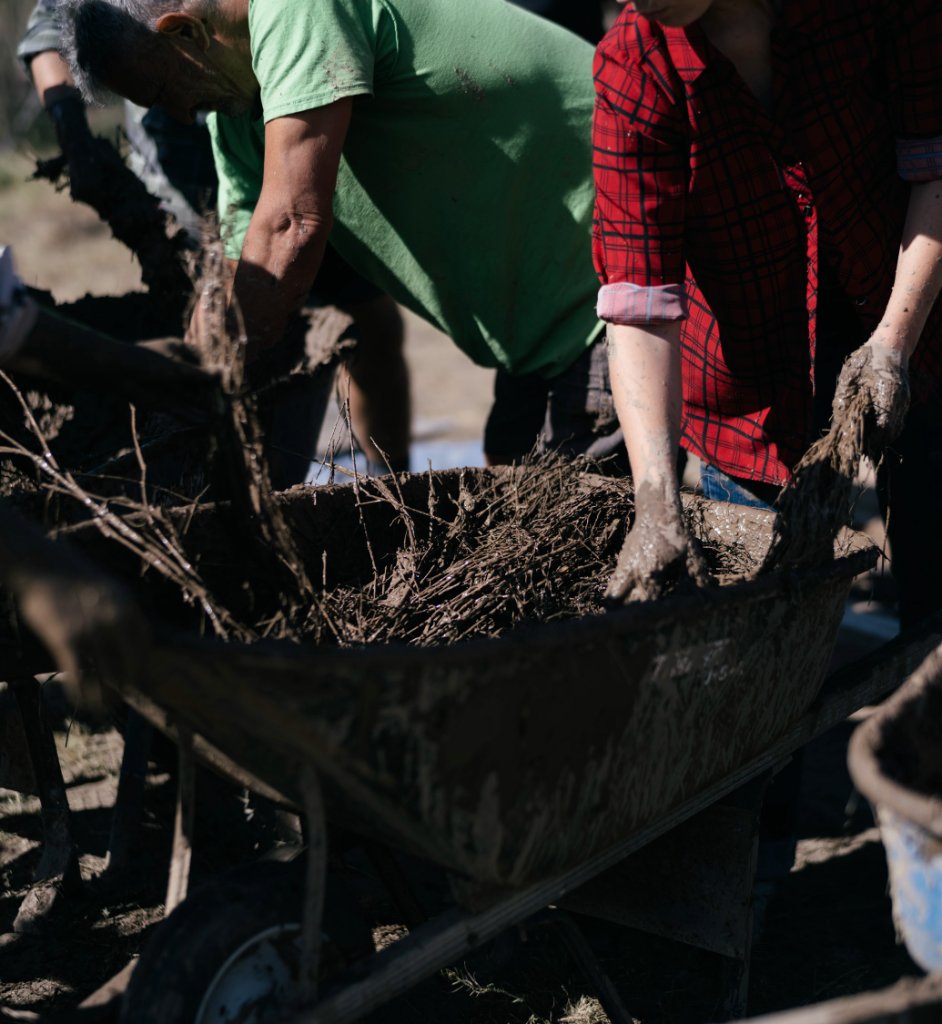
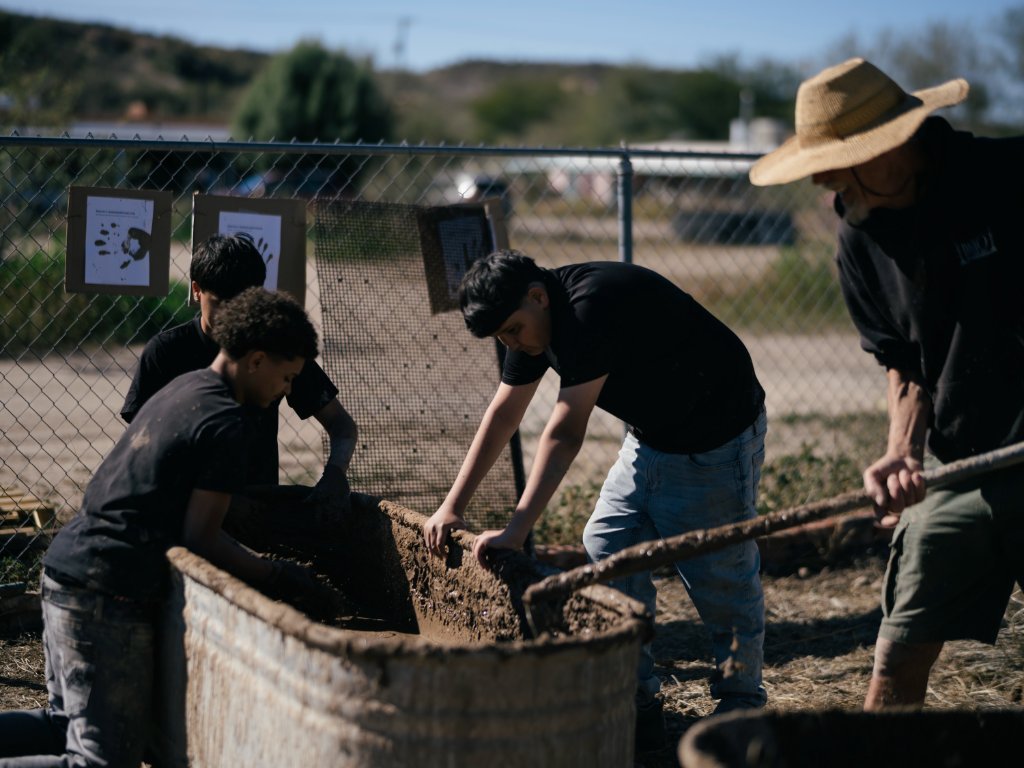
Slip-coated grass is folded into an adobe mixture — just dirt and sand — until every stalk is coated with mud. We use the grass at its full length (up to five feet), giving the brick lots of tensile strength and erosion resistance. Each four-foot-long brick uses several large plants.
MOLD
Four feet of tensile memory.
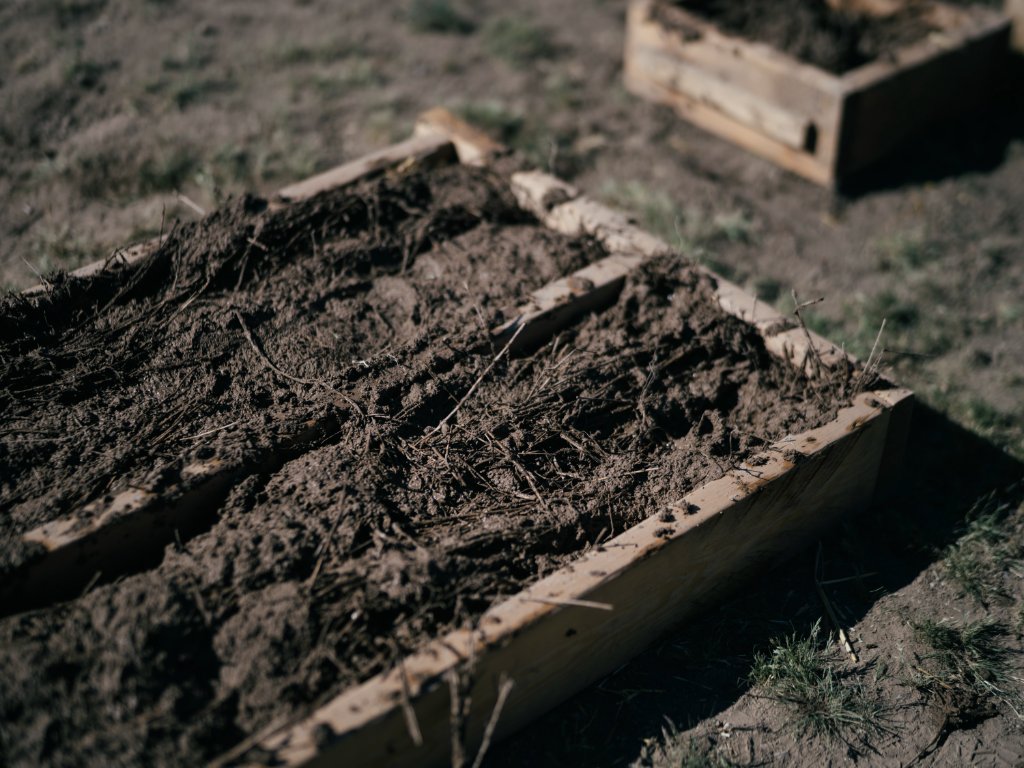
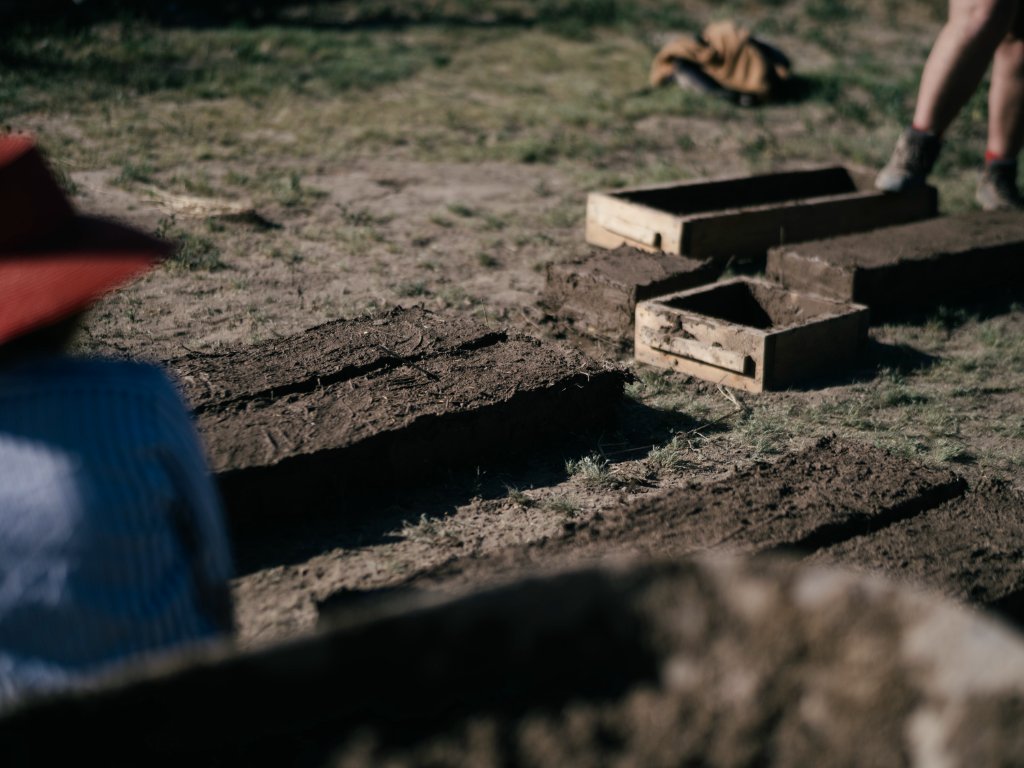
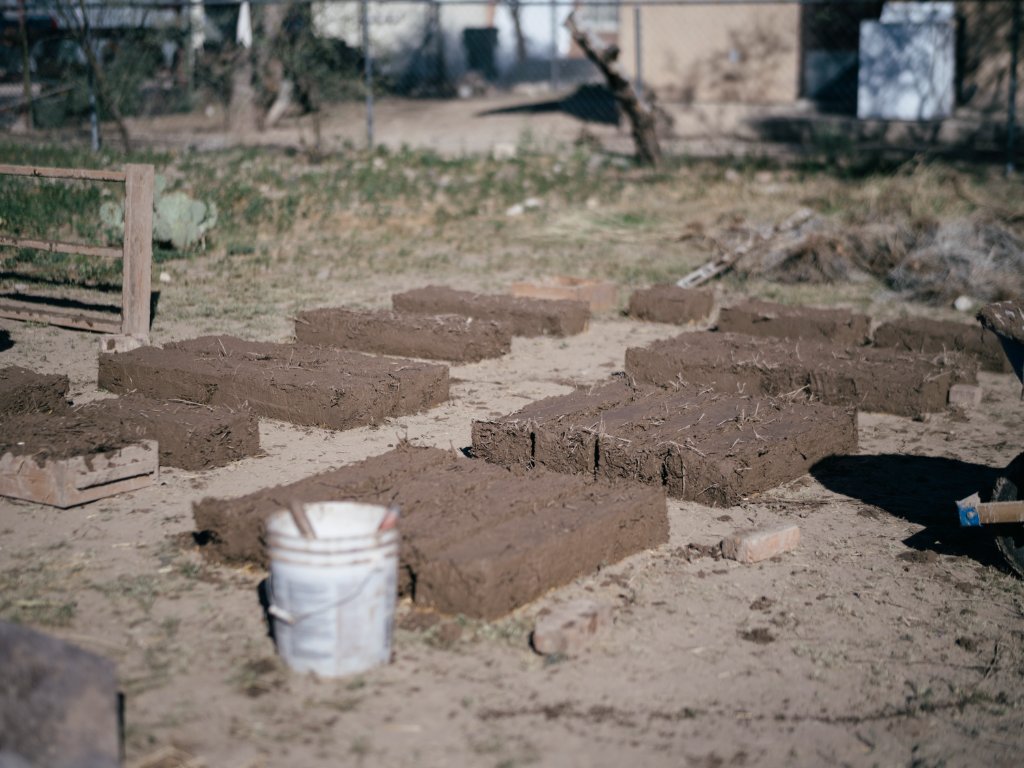
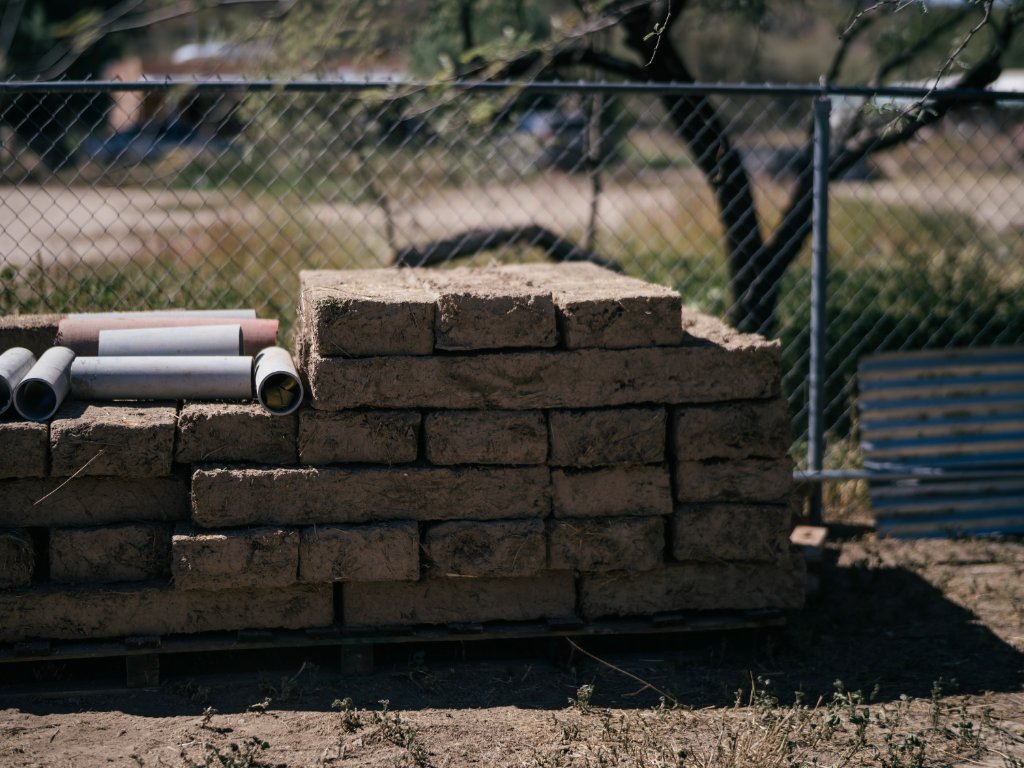
The mud-coated grass is laid into wooden forms up to four feet in length, then packed and smoothed. Uncut fibers run end-to-end through the brick like natural rebar, resisting cracking and carrying tensile load the way steel does in concrete — uniquely for an adobe product. The grass fibers also stabilize the brick against erosion.
CURE
Sun-hardened resilience.
Bricks dry in the desert sun, taking a few weeks to reach the strength needed for load-bearing walls. The Tucson climate's the kiln.
MOST SATURDAYS.
JUST DROP IN.
Come make bricks in community — here's how we do it. Check out our instagram and/or sign up on our volunteer list to confirm opening times. No experience needed. Towards the end of each work period, we make food, get to know each other, and talk about the world we'd like to see and the projects we're doing to get that rolling. There's even a horse to keep us on task!
WHEN
Most Saturdays
WHERE
Barrio Buffelworks Brickyard
931 W Mission Ln, Tucson, AZ 85745
Across the lane from Mission Garden. Make some bricks and then pay them a visit!
WHAT TO BRING
Water, sun protection, clothes you don't mind getting muddy.
We provide tools, clay, and food.
CONTACT
info@barriobuffelworks.org6:00 AM
BUFFELGRASS PULL
Meet at the yard. We head out together, harvest some buffelgrass, and haul it all back.
7:00 AM
BRICKMAKING BEGINS
Mix clay, pack molds, repeat. No experience needed — we'll show you the ropes.
9:00 AM
FOOD · MUSIC · COMMUNITY
We'll eat, play music, talk, and make the brickyard the place to be.
10:00 AM
WRAP UP
See you next Saturday!
OUR PROJECTS.
Several projects, stepping-stones to our vision, are currently underway.
Low-Income Row House
A pilot housing project on the grounds of the Sonoran Glass School, built with School members and other community. More information coming soon.
Working Model Casitas
As proof of concept for our ADU program, we are building model casitas in the backyards of two Tucson residents who have volunteered to house a person in need for partially or fully subsidized rent.
Children's Play Structure
A buffelgrass adobe children's play structure at Tucson Village Farm, built through hands-on community workshops. Funded by a U of A Campus Sustainability Fund grant.
Public Works
We are building two public works, one on the University of Arizona campus and one in Tucson, that will help to publicize Barrio Buffelworks.
YOUR BACKYARD /
SOMEONE'S HOME.
We are developing a buffelgrass adobe Accessory Dwelling Unit (ADU) for Tucson's Model Plan Library — a pre-approved design, with privacy wall and separate entrance, that you can pull without custom permitting. We'll help you to build it, for much less than a conventional model would cost; in exchange, you'll commit to housing an unhoused person or family for 2–5 years, for rent from the city or other entity.
For inspiration you can learn about Geel, a city in Belgium whose residents have housed needy pilgrims in people's houses for seven centuries. We may not have a Saint Dymphna, but Tucson — Cuk Ṣon in Tohono O'odham — has a four-millennia-long tradition of collectively caring for the community.
HOMEOWNER CHOOSES A PLAN
Select our buffelgrass adobe ADU design from Tucson's Model Plan Library. No need for an architect, no custom permitting. Plans are pre-vetted by the city so you're ready to go.
WE BUILD IT TOGETHER
Barrio Buffelworks helps you build, along with community members — cheaper and faster than the usual way, and you end up with a different feeling of ownership: of the process, not just the result.
THE HOMEOWNER SIGNS A CONTRACT
In exchange for our help with construction, you commit to housing a person or family in need for 2-5 years, for subsidized rent. Afterwards, the unit is yours to use as you like.
SOMEONE GETS A HOME
An unhoused person moves into a dignified space, with privacy and its own entrance, and with support provided as needed by city services. The cost to the city is much less than for a shelter bed.
CHEAPER THAN A SHELTER BED.
BETTER THAN A SHELTER BED.
Emergency shelter in Tucson costs the city roughly $50–$80 per person per night. A city-subsidized rent payment to a homeowner with a new ADU costs much less than that — while providing stable, private, long-term housing instead of a rotating shelter bed.
The homeowner gains income. The resident gains an actual home, with privacy and its own entrance. The neighborhood gains density without displacement or unsightly structures. The city reduces its emergency services burden.
No stability. No privacy. Not much community.
Stable home. Private space. Real neighbors.
Built by the people who will live in it.
CURRENTLY IN PILOT · TUCSON, AZ
Are you a homeowner interested in participating? Or a city official, housing nonprofit, or neighbor? Get in touch — we're actively building the program.
BUILDING A BETTER TUCSON /
BUILDING A BETTER WORLD.
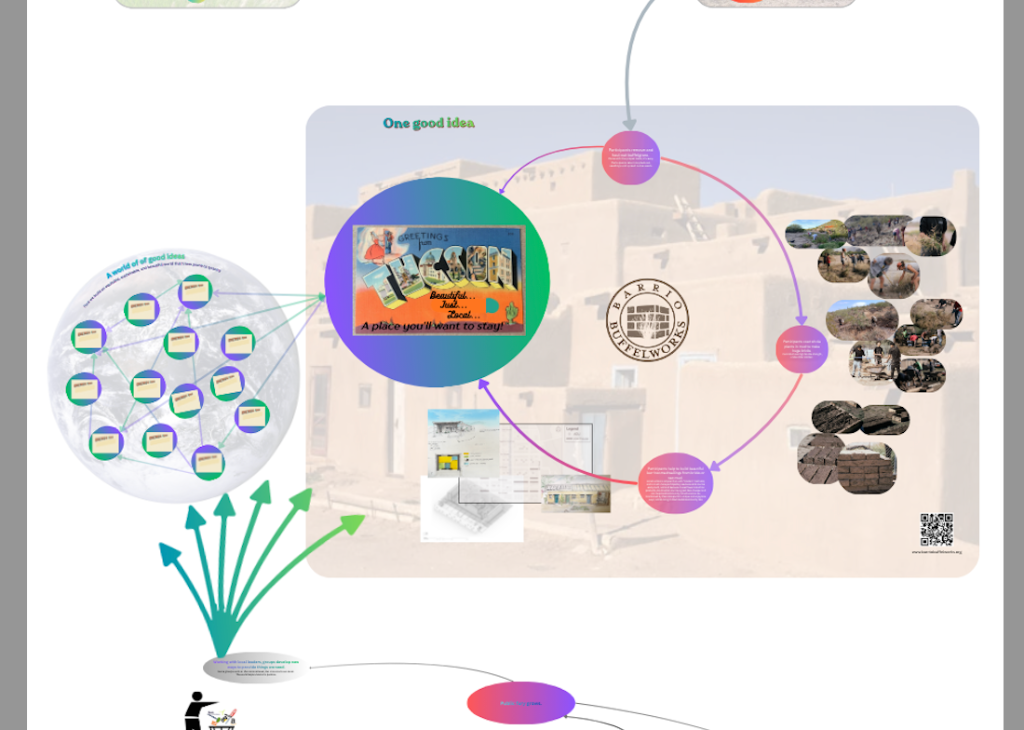
How buffelgrass became a scourge, how it can be a boon, and how projects like this one — prioritizing community and bypassing the usual corporate suspects — could not only change a city, but might even help prevent future fascisms from taking root. Might as well dream big, right?
DOWNLOAD / VIEWThe Fiber
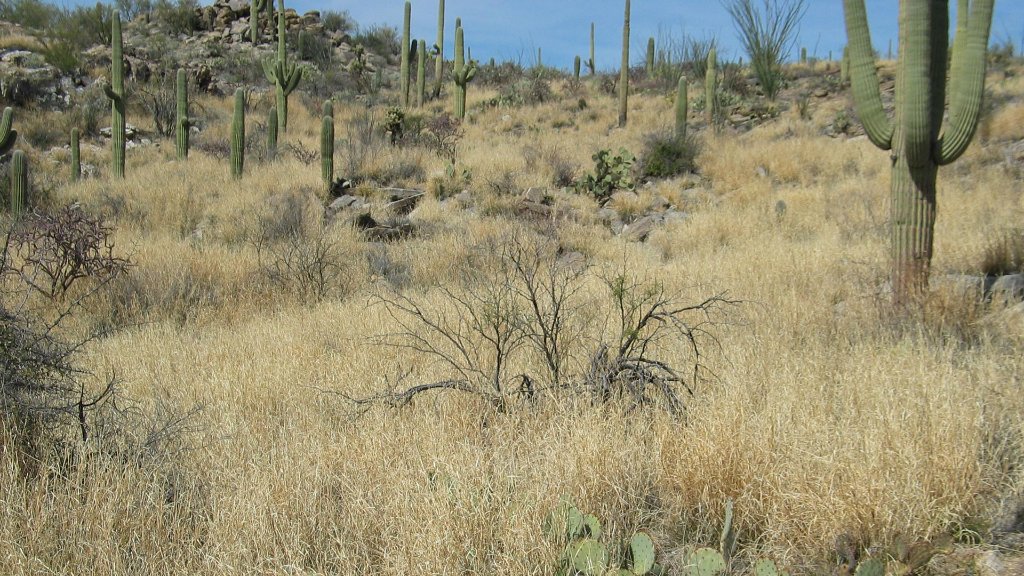
Buffelgrass (Pennisetum ciliare) is native to Africa and Asia. Starting in the 1930s, the U.S. Soil Conservation Service seeded it deliberately across the Sonoran Desert to feed cattle who'd largely eradicated native grasses, and for erosion control on the overgrazed rangeland. It was a short-sighted, profit-oriented fix that, like the "urban renewal" of the 1960s and 70s, created a really huge problem.
Buffelgrass thrives in the heat and outcompetes native plants like saguaros, palo verdes, ironwoods, creosotes, and mesquites for water. It's highly flammable, and, unlike desert natives, it resprouts fast after fire. Millions of dollars are spent each year just trying to slow the spread, but the best way to stop it is also the cheapest: by hand.
That's also how we make it a resource.
We're not inventing anything new — sun-dried earth mixed with fiber has been used here for 4,000 years, and worldwide for over 10,000. But buffelgrass gives adobe some superpowers. Full-length stalks laid with mud into oversized molds makes a brick with great tensile strength, which standard adobe lacks. Not only that, these really big bricks are much easier than regular bricks to assemble, and require a whole lot less expertise.
Once it's out of the ground and worked into bricks, what's not to love?
Pilot phase — Barrio Buffelworks Brickyard #001
INVASIVE SPECIES · HOUSELESSNESS · AFFORDABLE HOUSING — ONE SOLUTION
The Future
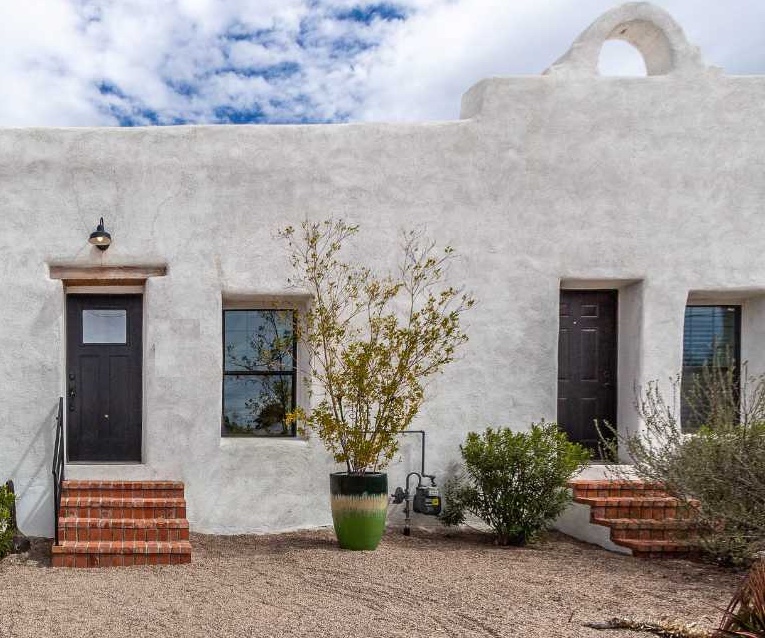
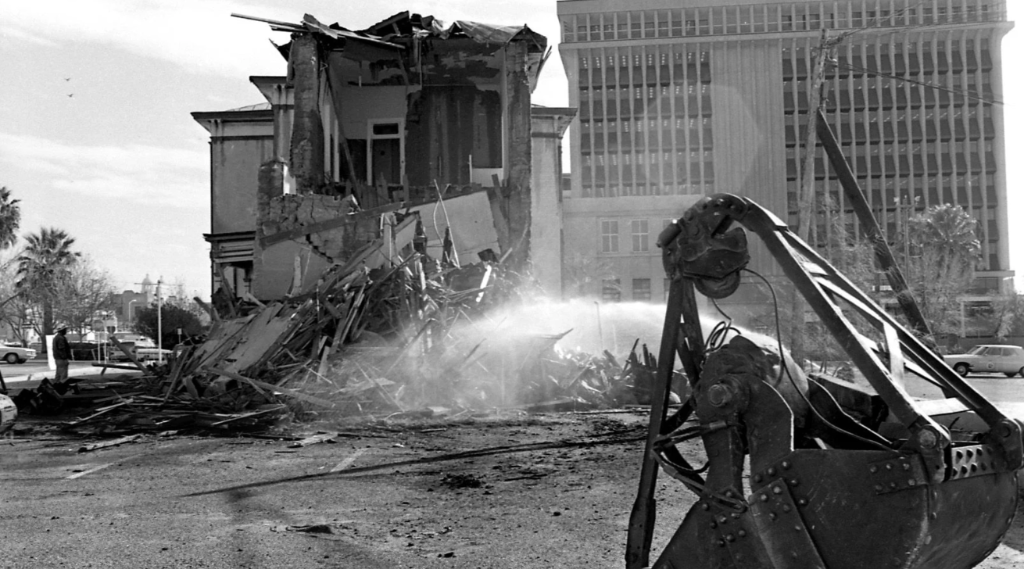
The Barrio Buffelworks brickyard is only a prototype, a first step towards a city-supported network of brickyards that pays those who are struggling to turn dirt and weeds into beautiful low-income housing, whether in low-income "villages" (i.e. public housing) or scattered throughout the city as ADUs. This will address houselessness and the buffelgrass scourge, and will also restore to Tucson some of the beauty lost in the '60s and '70s, when the city demolished hundreds of adobe houses in Tucson's oldest neighborhood, Barrio Viejo.
The delusion that modern technology can solve any problem led to Tucson's "urban renewal" disaster, as well as our buffelgrass infestation. We can undo at least part of that damage through technology used here for thousands of years, with only small changes to form and to fiber. What other hubristic disasters could we start to undo by letting ourselves be inspired by how things were once done?
PRESS AND SO ON.
Videos, articles, and other materials to read or watch.
Short film
Make a Brick, Build a World
About Barrio Buffelworks. From a series exploring the Santa Cruz river, produced by the Southwest Folklife Alliance.
Waging Nonviolence
Making change from the dirt up
An Arizona community reuses an invasive weed to construct low-income housing — showing that when we can't pressure the top, we can rebuild the bottom.
The Border Chronicle
The real border security
An episode redefining a profoundly sloppy concept that has needed an update for a very long time.
KOLD · CBS Tucson
Destructive grass into homes
A TV spot about the young folks helping to make buffelgrass adobe an engine for change.
KVOA · NBC Tucson
Climate Matters
Another TV spot about our program and how widespread use of buffelgrass adobe could prevent wildfires.
University of Arizona · Arizona Arts
Digging In
A press release about our brickyard, the students who make it go, and how buffelgrass adobe could ease a few crises.
Pima County
Buffelgrass into bricks
Pima County celebrates Barrio Buffelworks and the Green Stewards team.
JOIN THE BUFFELWORKS FAMILY.
Follow our Instagram to keep up on the latest news and brickyard times.
Sign up on our volunteer list to receive the latest info for Saturdays.
Subscribe to our Substack to learn of developments and opportunities.
YOU CAN ALSO DONATE BUFFELGRASS.
Buffelgrass pulls happen most days in Tucson. Join one and bring us the haul!
ON OUR SATURDAY PULLS
Come with us.
We head out early most Saturdays. Join us! We'll load everything into the truck and haul it back to the brickyard. Stick around to make bricks.
AT OTHER PULL EVENTS
Bag it. Drop it off.
For any pull in or near Tucson, you can bag the grass and bring it to us to be turned into bricks. If we're not open, toss the bags over our 3-foot fence, and send us an email to let us know, so we can thank you.
info@barriobuffelworks.orgFIND A BUFFELGRASS PULL NEAR YOU
Arizona-Sonora Desert Museum · Volunteer Events List